
You Approve Your Result Before Treatment Ever Begins
The question behind almost every cosmetic consultation is the same one: will it still look like me? You've pictured an outcome, maybe for years, and alongside that picture lives a quieter fear of teeth that are too white, too long, too uniform, too obviously done. That fear is valid, and it is exactly what a well-run smile design process is built to address.
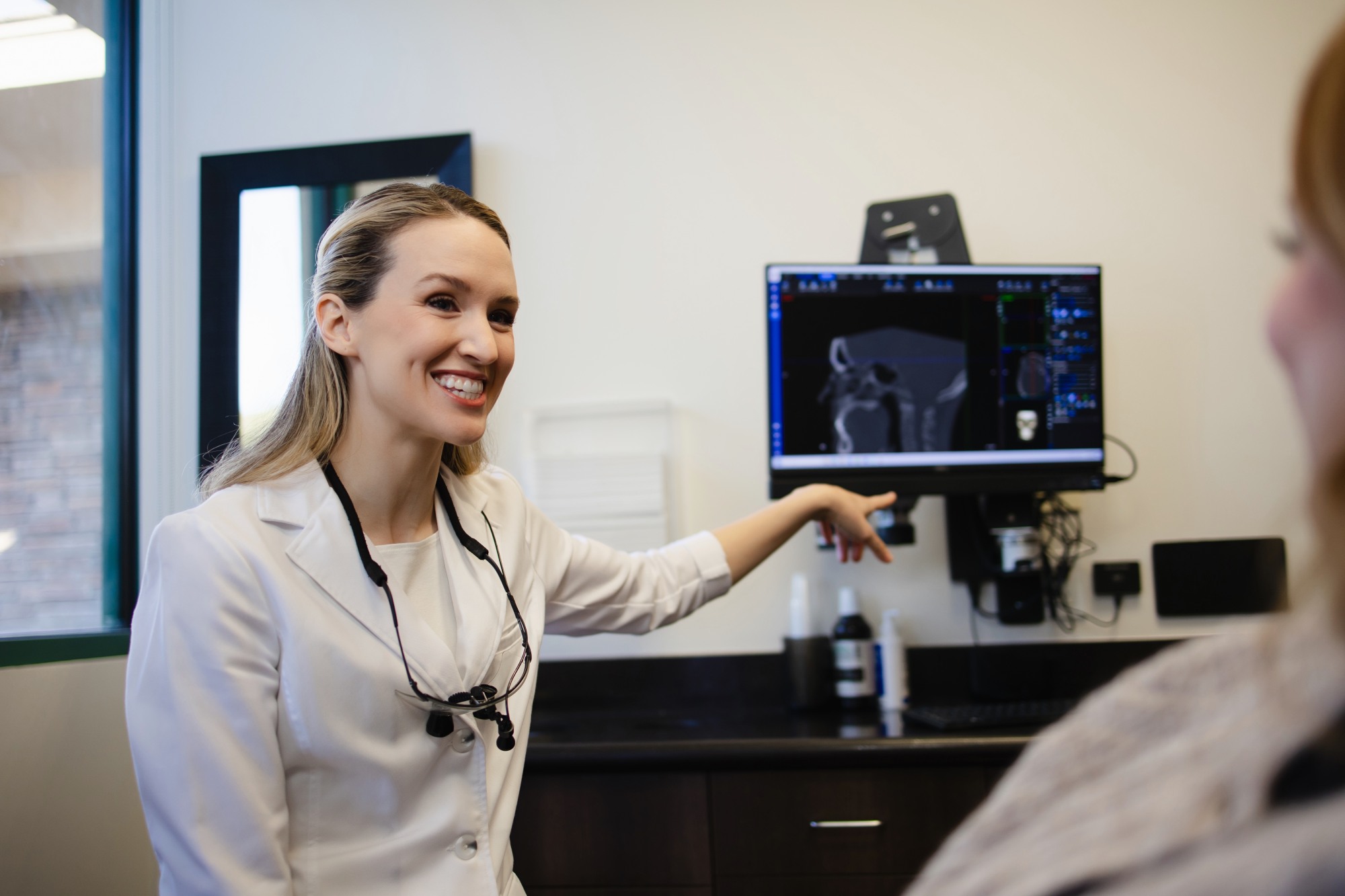
Dr. Castor and the team at Restore Dental Studio in Agoura Hills answer that question by showing you before any irreversible step is taken. You see a digital design, wear a physical preview over your own teeth, and approve the result before anything permanent begins. The proportions are shaped to your face, not a template.
To see what that preview would look like for you, call (818) 889-0400.
How Smile Design Actually Works
- Smile design begins with your face, not your teeth. Your lip line, facial proportions, and how you move when you talk all shape the design before tooth color is ever discussed. That is where every cosmetic case begins.
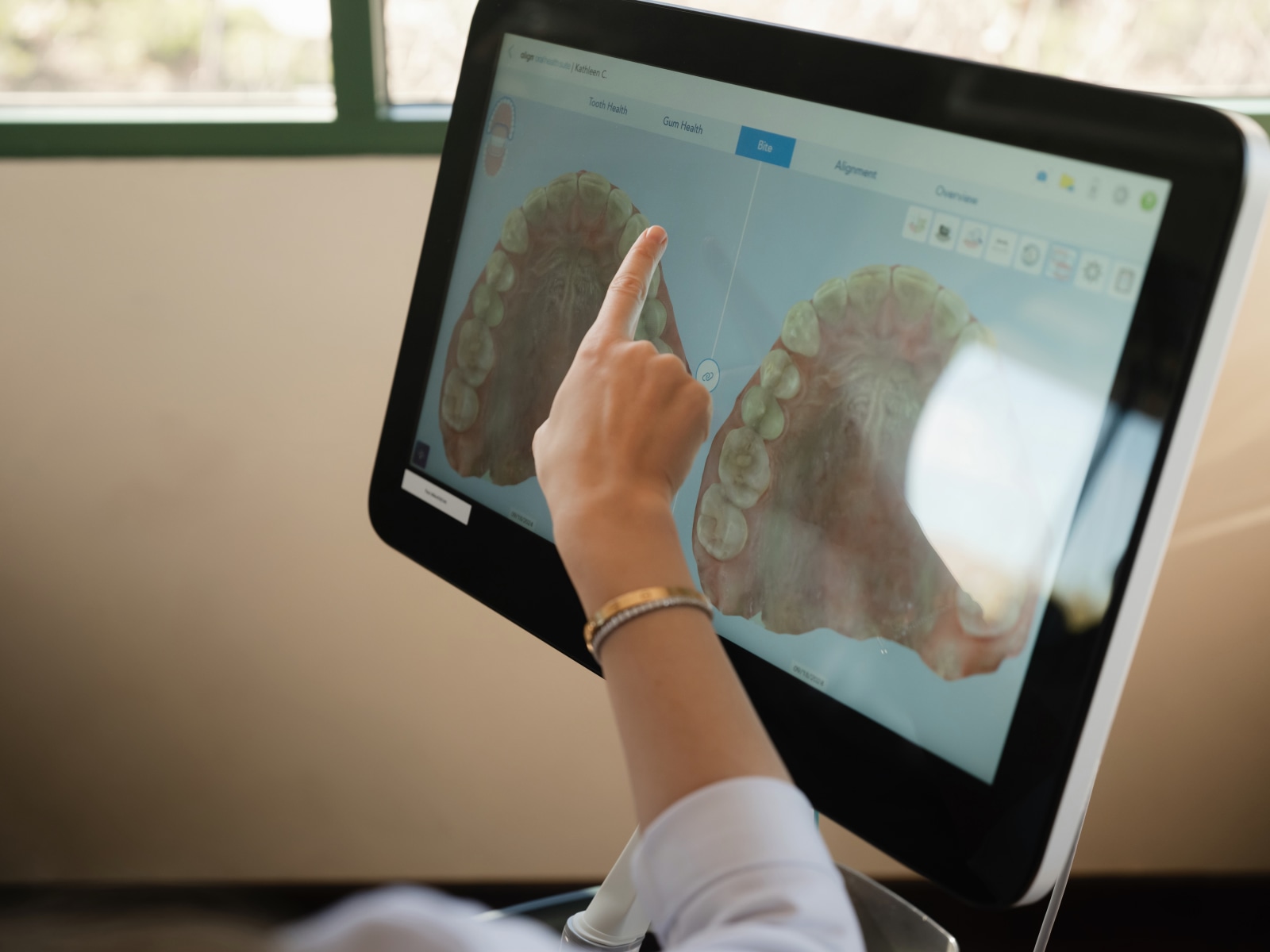
- You see a digital design, then a physical mock-up placed over your own teeth. That preview stage is where adjustments happen, before anything permanent begins.
- A natural-looking result is about how porcelain handles light, not just its color. The way a restoration is layered and textured determines whether it looks lifelike or flat. That attention to detail is what makes the difference between a smile that looks placed and one that looks grown.
Your Face Is the Blueprint, Not Your Teeth
Cosmetic dentistry falls short when the design starts in the wrong place. Teeth can be made straight and white and still look off in a photograph, because the face around those teeth was never part of the plan.
- Jaw shape and lip curve at rest. These set the outer boundaries of your smile before a single tooth is designed.
- Facial centerline alignment. The center of your smile should follow the center of your face, not just split your two front teeth evenly.
- Front tooth length. Your two front teeth interact with your lip line when you talk, not just when your face is still. Length affects how your smile reads in motion.
- Arch width and visual rhythm. The width of the teeth beside your front two sets the rhythm of your whole front arch. When this is off, the smile looks repetitive, which is exactly what people mean when they say a smile looks fake.
All of these proportions are decided before any porcelain is placed. A result built on sound structural principles looks right five years later, in different light, from a different angle.
Four Steps That Let You See and Approve Your Result First
The preview process unfolds in stages, and each one gives you something real to respond to.
1. Photographs and Records
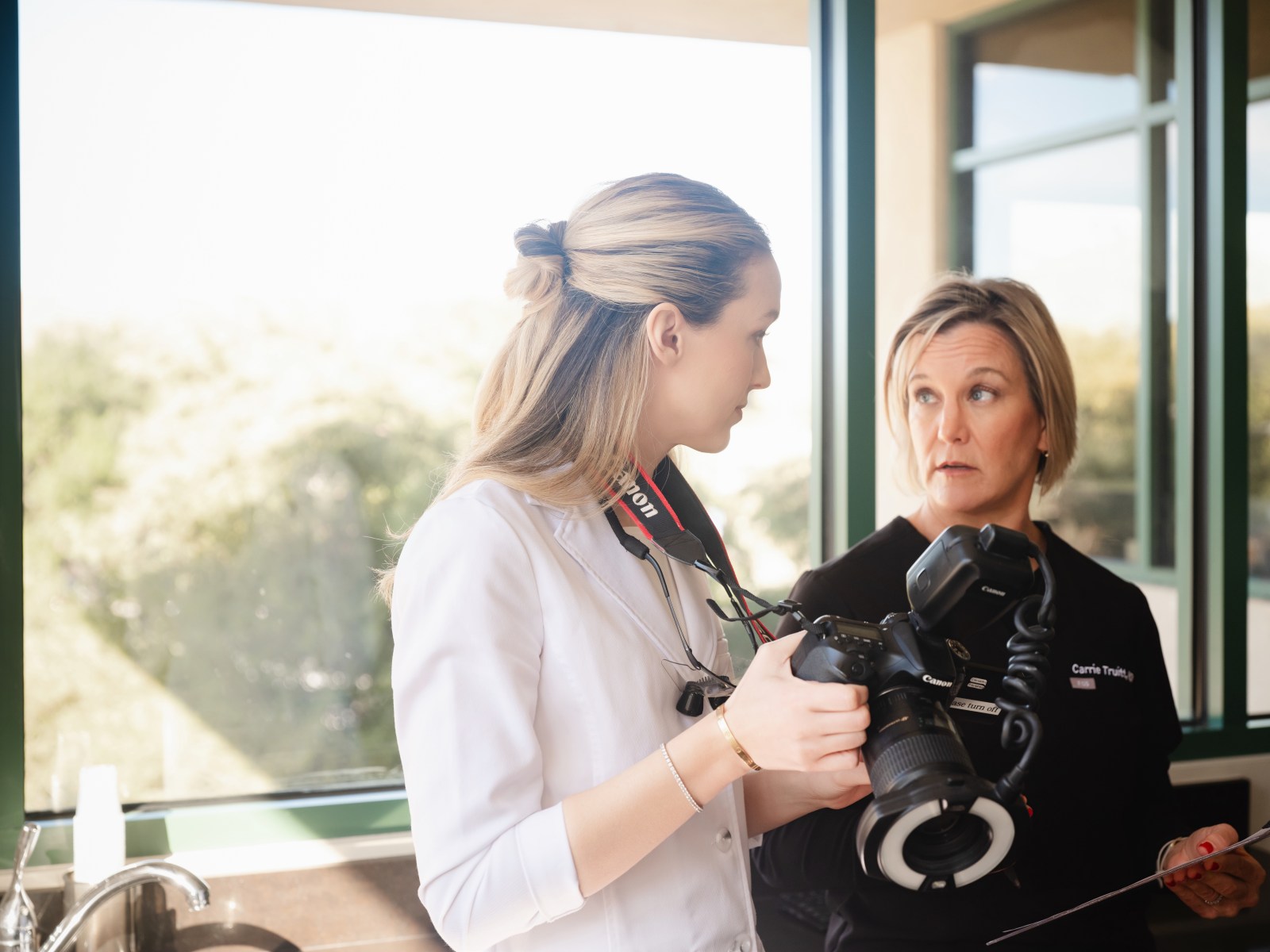
We take photographs under consistent lighting from precise angles, along with scans and measurements. This lets us study your facial proportions, how your lips move, and how much tooth shows when you rest, speak, and smile fully. How much tooth shows at rest is one of the most telling measurements in the process, and it is something you simply cannot see by looking in a mirror.
2. The Digital Design
Using those records, we build a proposed design mapped to your face. Tooth length, width, symmetry, biting edge position, and shade are all considered against your own proportions. You see a specific proposal overlaid on your own photographs, which makes it much easier to say "longer," "softer," or "that's exactly right."
3. The Mock-Up You Can Wear
That digital design is then translated into something you can actually try on. We place a trial smile directly over your teeth so you can see the proportions in your own mouth, in natural light. You wear it, take photos home, and sit with it long enough to know whether it feels like you.
4. Refinement, Then Approval
If the length feels too bold, the shade too stark against your complexion, or the edges too square for your taste, that conversation happens here, while changes cost nothing but time. Treatment only begins once you have approved the design, whether that means porcelain veneers, bonding, or a broader restorative plan.
What Makes Your Result Look Like You, Not Someone Else
Several factors shape what a beautiful result actually looks like on you, and understanding them is part of what makes the design process personal rather than formulaic.
- Existing tooth structure. How thick your teeth are, how light passes through them, and their natural underlying shade all affect how much a veneer can brighten your smile before it starts looking opaque rather than natural.
- The gum line. Gums frame every tooth. When gum levels are uneven across your teeth, even well-made restorations can look off, regardless of how precise the porcelain is.
- Skin tone and lip color. The same shade of porcelain reads warm on one complexion and noticeably cool on another.
- Facial symmetry and proportions. Almost no face is perfectly symmetrical. A good design accounts for that directly; ignoring it is what makes a smile look artificial.
- Your own taste. Some people want soft, rounded, and understated. Some want defined and luminous. Both are legitimate, and the design should be built around the one you actually want.
Every one of these factors is part of the design conversation, not a complication. There is no single ideal smile to aim for, only a result that belongs to your face. To talk through what that looks like for you, call Dr. Castor at (818) 889-0400 or request a consultation at our Agoura Hills studio.
What Makes Porcelain Look Real in Any Light
Every restorative decision starts with the tooth itself. Dr. Castor works from biomimetic principles, meaning she removes as little natural tooth structure as possible and selects materials that flex, wear, and bond the way your real teeth do. The more natural enamel that stays intact, the better the porcelain performs and the healthier the tooth remains long term.
Light behavior is what makes this foundation so important. Natural enamel is semi-translucent, brighter at the center of the tooth and more see-through at the edges. Porcelain and composite each handle light differently, so choices about material, thickness, layering, and surface texture all shape how a tooth looks in real life, in photos, and under any lighting. Dr. Castor reviews those details directly with the ceramist for every case, rather than sending a shade number and leaving the rest to chance.
The artistic side of this work is what ties it all together. Knowing how much tooth should show at rest versus a full smile, reading facial shape, watching how the lips move — these are judgment calls no software makes on its own. That combination of clinical precision and visual instinct is what separates a result that is technically correct but flat from one that looks like it simply grew there. To talk through what that could look like for your smile, call our Agoura Hills studio at (818) 889-0400.
Why Your Smile Feels Different Before It Feels Right
Even a beautifully designed result takes a little time to feel like yours. A short adjustment period is completely normal, and knowing what to expect makes it easier to navigate.
- Speech shifts slightly in the first days. Sounds like S and F can feel unfamiliar while your tongue adjusts to the new tooth shapes.
- Your lips need time to adapt. Your lips adjust to the new contours gradually, so your smile may feel bigger than it looks for a short while.
- Mild gum line tenderness is common. It fades as the tissue heals, whether you had a single bonded edge or a full set of porcelain veneers.
None of this means something went wrong. The design you approved is exactly what was placed. Most patients find that within a few weeks, everything feels natural.
Your Questions, Answered Honestly
Can I Change My Mind After Seeing the Mock-Up?
Yes. The mock-up exists specifically for revision. Length, shade, edge shape, and overall look are all adjustable at that stage, and changing your mind is expected, not an inconvenience. Nothing moves forward until you are satisfied with what you see.
Will My Smile Look Obviously "Done"?
Only if that is what you want. A uniform shape, a shade brighter than anything found in nature, and edges that lack translucency are deliberate design choices, not default outcomes. Every case at Restore Dental Studio is built around your face, your proportions, and your preference.
How Long Does the Whole Process Take?
That depends on how much is changing and whether anything needs to be addressed first, such as gum health, bite alignment, or tooth position. Timeline, sequencing, and cost are all covered during your consultation so you leave with a clear picture of what to expect.
Does the Preview Guarantee the Final Result?
Yes. The final restorations are built directly from the mock-up as their blueprint. The finished porcelain is typically an improvement over the preview because the trial material is a single flat layer, while the final porcelain is built up in multiple layers to create natural depth and light response.
Will My Veneers Look Natural in Photos?
Yes, when the porcelain is layered and textured correctly. Flat, opaque veneers reflect light evenly and can look artificial on camera. Properly crafted porcelain carries variation in translucency across the tooth, so it responds to light the way natural enamel does, in person and in photographs.
Your First Visit Is a Look, Not a Commitment

Your first smile design visit in Agoura Hills is a planning appointment. We take photographs under consistent lighting, measure how much tooth shows at rest and when you speak, and study your gum line and how your lips move. Depending on what we find, the plan may involve porcelain veneers, bonding, or teeth straightening with Invisalign. You leave with a clear picture of the sequence and the timeline, not a contract. Call Dr. Castor and our team at (818) 889-0400 and we will take it from there.

